
Smart home devices are becoming more common in many homes. They help make life easier and more comfortable. But have you ever wondered how these devices talk to each other? How does your smart light know when to turn on? Or how does your smart speaker control your thermostat? In this article, we will explain how smart home devices communicate with each other in simple words.
What Are Smart Home Devices?
Smart home devices are tools or machines that can connect to the internet. They can send and receive information. Examples include smart lights, smart speakers, smart locks, and smart thermostats. These devices can work together to make your home better.
For example, a smart door lock can tell the smart light to turn on when you enter your home. Or a smart smoke detector can tell your smart speaker to warn you about danger. To do this, these devices need to communicate or “talk” with each other.
How Do Smart Devices Talk?
Smart devices use different ways to send messages. They use wireless connections to share data. The most common ways are Wi-Fi, Bluetooth, Zigbee, and Z-Wave. Let’s look at each one.
Wi-fi
Wi-Fi is the same technology you use to connect to the internet. Many smart devices use Wi-Fi to talk. Wi-Fi can send data fast and over a long distance inside your home.
For example, your smart camera sends videos to your phone using Wi-Fi. However, Wi-Fi uses more power. So, small devices like sensors may not use Wi-Fi all the time.
Bluetooth
Bluetooth is a way for devices to talk over short distances. It uses less power than Wi-Fi. It works well for devices that are close together.
For example, your smart watch talks to your phone using Bluetooth. Some smart home devices also use Bluetooth to connect to a phone or a hub.
Zigbee
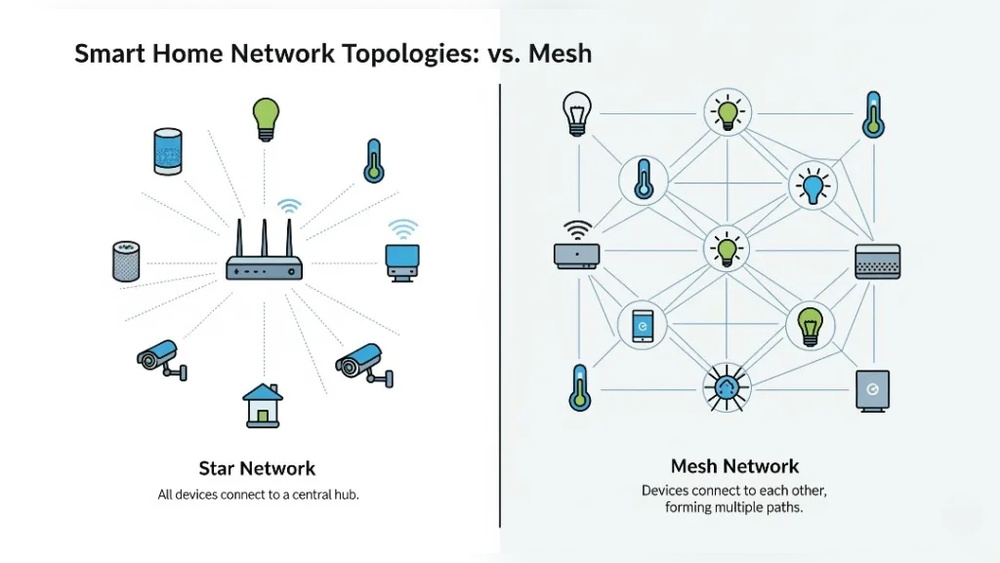
Zigbee is a special wireless technology for smart homes. It uses very little power and works well inside houses. Zigbee devices can form a network where devices pass messages to each other. This helps devices far apart still communicate.
Many smart lights and sensors use Zigbee to talk to a central hub or each other.
Z-wave
Z-Wave is another wireless technology made for smart homes. It is similar to Zigbee but uses a different frequency. Z-Wave also creates a network where devices pass messages along.
Z-Wave is popular for smart locks, sensors, and lights. It helps devices work together without using much power.
The Role of a Smart Home Hub
Sometimes, smart home devices need help to communicate. This is where a smart home hub comes in. A hub is a small box or device that connects to all your smart devices.
The hub acts like a translator. It understands different languages or signals. It helps devices that use different communication types work together.
For example, if you have a Zigbee smart light and a Wi-Fi smart speaker, the hub helps them connect. You can control all devices through one app or voice assistant.
How Devices Share Information
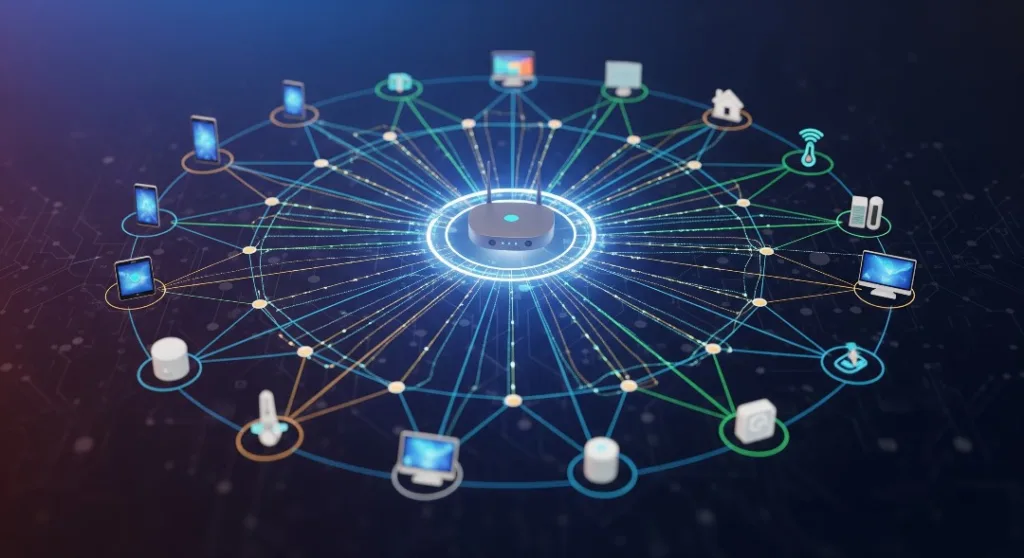
Smart devices send information in small pieces called data packets. These packets travel through the air using radio waves. The devices listen and send messages based on what they receive.
When one device sends a message, others check if it is for them. If yes, they act on it. If no, they ignore it.
This system helps devices work together and respond quickly.

Credit: www.teltonika-networks.com
Credit: edgemodule.com
Examples of Smart Device Communication
Here are some simple examples of how devices talk in a smart home.
- Motion sensor and light: When the motion sensor detects movement, it sends a message to the light to turn on.
- Door lock and camera: When the door unlocks, the camera starts recording.
- Thermostat and smart speaker: You ask the speaker to make the house warmer. The speaker sends the command to the thermostat.
- Smoke detector and alarm: The smoke detector senses smoke and tells the alarm to sound loudly.
What Is a Protocol?
A protocol is like a set of rules. It tells devices how to send and receive messages. Without protocols, devices would not understand each other.
Different smart devices use different protocols. Some common protocols are:
| Protocol | Used For | Range | Power Use |
|---|---|---|---|
| Wi-Fi | Internet, video, audio | Up to 100 meters indoors | High |
| Bluetooth | Short-range device connections | Up to 10 meters | Low |
| Zigbee | Smart lighting, sensors | 10-100 meters (mesh network) | Very low |
| Z-Wave | Smart locks, sensors | Up to 30 meters (mesh network) | Very low |
Protocols keep communication clear and safe.
Mesh Networks: Devices Helping Devices
Some smart home devices use mesh networks. This means devices work together to send messages. If one device is far from the hub, the message can hop through other devices.
This helps cover large homes. It also makes the system more reliable. If one device fails, messages find another path.
Security in Smart Device Communication
Security is very important. These devices share important information. They must keep data safe from hackers.
Most smart devices use encryption. This means they scramble the data. Only the correct device can read it. This keeps your home data private.
Always use strong passwords and update your devices. This helps protect your smart home.
Why Do Devices Need to Communicate?
Devices communicate to work together. Alone, a smart bulb can only turn on or off. But with communication, it can turn on when you arrive home.
Communication makes your home smarter and easier to live in. It helps save energy, time, and effort.
Summary
Smart home devices talk using wireless signals. Common methods are Wi-Fi, Bluetooth, Zigbee, and Z-Wave. A smart hub can help different devices work together. Devices send small data packets following set protocols. Mesh networks help devices cover large areas. Security is important to keep data safe. Communication helps devices work as a team to make your home better.
Understanding this helps you choose the right smart devices. It also helps you use them well for a safer, smarter home.
Frequently Asked Questions
How Do Smart Home Devices Connect With Each Other?
Smart home devices connect using Wi-Fi, Bluetooth, Zigbee, or Z-Wave protocols for smooth communication.
What Role Does A Smart Hub Play In Device Communication?
A smart hub acts as a central controller, linking various devices for easy management.
Can Smart Home Devices Work Without Internet?
Some devices communicate locally without internet, but many need the internet for full functionality.
How Secure Is Communication Between Smart Home Devices?
Most devices use encryption to protect data and keep communication safe from hackers.